 Essential Ndubuisi

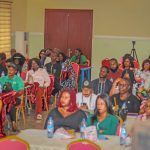
In a deliberate effort to bridge the gap between young people and grassroots governance, a youth-led civic education initiative, Grassroots Digital Governance Advocacy for Youth (GDGAY), was recently activated at the Lagos State University of Science and Technology (LASUSTECH), Ikorodu.
The project, supported by the Nigeria Youth Futures Fund (NYFF) under its “The Nigeria We Want” initiative, brought together 30 youths from Ikorodu, comprising 22 males and 8 females, many of whom had little to no prior interest in civic engagement or understanding of how local governments function.
The initiative was conceived and led by Idris Olalekan Adegbite, a digital skills and civic-tech advocate, alumnus of the Legislative Mentorship Initiative (LMI), and Founder of Creative Digita Technologies and Creative Digita Foundation. According to him, the project was designed to “demystify governance for young people and equip them with practical tools to demand accountability constructively.”
From Civic Apathy to Active Citizenship
Before the workshop, most participants admitted they were unaware of how local government budgets are allocated, how constituency projects are tracked, or how citizens can engage public officials responsibly. GDGAY was structured to change that narrative through practical learning, open conversations, and real-time digital demonstrations.
The program featured three intensive sessions delivered by alumni of the Legislative Mentorship Initiative, combining governance education with digital innovation.
Understanding Local Government and Accountability
The first session was facilitated by Hon. Emmanuel Abikoye, an LMI alumnus, youth development and social impact professional, data analyst, and active politician. He introduced participants to the fundamentals of active citizenship, the structure of local government, and the role of data in governance.
Using verified public data, Hon. Abikoye explained how budgets and allocations are distributed and emphasized that information remains the strongest tool for demanding accountability. He encouraged youths to engage leaders diplomatically, stressing that sustainable development can only be achieved when citizens are informed and intentional.
“Young people must understand that governance is not distant. When you have the right information and use it wisely, you can engage leaders and influence development,” he noted.
Social Media as a Tool for Advocacy
The second session was led by Hon. Boluwatife Agbonna, an LMI alumnus, brand and communication strategist, and Founder of Bolvic Global Communications. Her presentation focused on the power of social media for civic awareness and advocacy, while also highlighting the responsibility that comes with it.
She spoke extensively on effective communication, personal branding for active citizens, and the ethics of engaging public officials online without hate speech or violence.
“Social media never forgets,” she reminded participants, encouraging them to communicate issues clearly, respectfully, and strategically.
She concluded her session with a powerful message that resonated strongly with the audience:
“You cannot feature in a future whose picture you have not properly captured.”
Using Digital Tools to Track Government Projects
The final session was facilitated by the convener, Idris Olalekan Adegbite, who led participants through a hands-on practical class on tracking government projects and budget allocations using digital civic-tech tools.
Participants were introduced to platforms such as Tracka, BudgIT, MyLGA, as well as official websites of the National Assembly and Lagos State House of Assembly, showing them how to identify projects, monitor implementation, and find contact details of their representatives.
For many participants, this was their first time accessing such platforms. By the end of the session, over 70% of participants had registered on Tracka and begun tracking projects in their constituencies.
“This session opened our eyes. I didn’t know we could actually track projects like this and ask questions,” one participant shared.
Voices from the Participants
A Participant, Elijah, described the workshop as eye-opening and transformative.
“Before now, I never understood how youths could demand accountability. Now I know where to get information and how to speak up properly,” a participant said.
Another participant, Mariam, added:
“The session on social media changed how I see advocacy. I now understand that the way we communicate online matters if we want to be taken seriously.”
Hon. Boluwatife Agbonna also commended the initiative, stating:
“GDGAY is the kind of grassroots project Nigeria needs. The curiosity and willingness of the youths to learn was impressive. With the right guidance, young people can truly drive accountability.”
Building a Culture of Engagement
The event concluded with a networking session that allowed participants to interact closely with the facilitators, ask questions, and share reflections. Many participants expressed renewed interest in civic engagement and a commitment to staying informed about local government activities.
Acknowledgements
The organizers expressed appreciation to the Nigeria Youth Futures Fund, the Dean of Student Affairs, LASUSTECH, the Alumni Association of the Legislative Mentorship Initiative, and the entire team at Creative Digita Foundation for their support in making the project a success.
As Nigeria continues to grapple with governance challenges, initiatives like Grassroots Digital Governance Advocacy for Youth are proving that empowering young people with knowledge and digital tools can strengthen accountability and deepen democratic participation at the grassroots.