
 Essential Ndubuisi
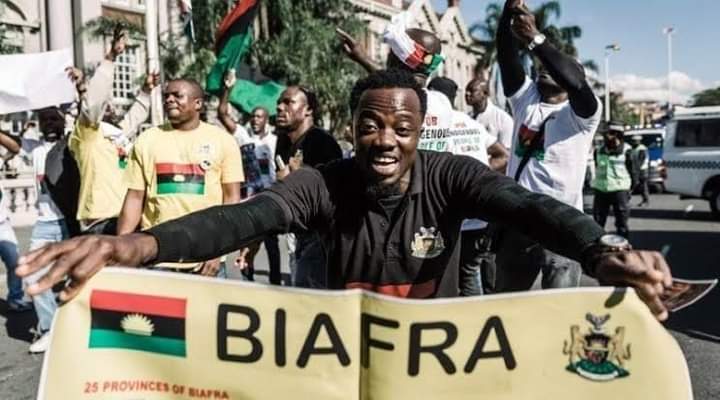
Persecuted members of Biafran secessionist groups, Indigenous People of Biafra (IPOB), which has been designated as a terrorist organisation by the Nigerian government and the Movement for the Actualisation of the Sovereign State of Biafra (MASSOB), will now be reportedly granted assylum by the UK government.
TheCable reported that UK Visas and Immigration (UKVI), a division of the Home Office in the just-released ‘Country Policy and Information Note Nigeria: Biafran secessionist groups’, directed its decision makers to consider if a person “who actively and openly supports IPOB is likely to be at risk of arrest and detention, and ill-treatment which is likely to amount to persecution”.
‘Biafra’ was defined as an area “in the south-east of Nigeria that comprises the states of Abia, Imo, Ebonyi, Enugu and Anambra. The area is inhabited principally by Igbo (Ibo) people who are one of the country’s 3 largest ethnic groups”.
The decision makers are to consider the following;
“Must also consider if the [Nigerian] government’s actions are acts of prosecution, not persecution. Those fleeing prosecution or punishment for a criminal offence are not normally refugees. Prosecution may, however, amount to persecution if it involves victimisation in its application by the authorities.
“Consider each case on its facts to determine if the person is likely to be of interest to the [Nigerian] government and whether this is for the legitimate grounds of prosecution which is proportionate and non-discriminatory”.
Giving an example of persecution, the UKVI said is “if it is the vehicle or excuse for or if only certain groups are prosecuted for a particular offence and the consequences of that discrimination are sufficiently severe. Punishment which is cruel, inhuman or degrading (including punishment which is out of all proportion to the offence committed) may also amount to persecution”.
While the onus is on the applicants to demonstrate that they will be “at risk of persecution or serious harm” in Nigeria, the publication reported that the decision makers are to consider each case on its facts, taking into account:
profile, size, and organisation of the group/organisation to which the person belongs and its activities
whether a person in the UK would wish to continue their activism if returned to Nigeria (if not, why not)
whether the group/organisation has a presence in Nigeria as well as outside of the country and any evidence that it is being monitored by the government
person’s profile and political activities (including those online) and relevant documentary or other evidence
profile and activities of family members
past treatment.
Acknowledging that the Nigerian government has a responsibility to maintain law and order, “to prevent and protect the public against acts of violence”, the communique added that when supporters or members of MASSOB or IPOB “have incited or used violence to disrupt public order, the government may have legitimate grounds to arrest and prosecute those people”.
It also noted that “where the government has arrested and detained persons who, for example, peacefully participate in demonstrations and has then charged them with treason or the person is subjected to periods of detention in degrading or inhuman conditions, such treatment is unlikely to be fair or proportionate, and is likely to amount to persecution.”